I need to learn the following Korean cultural vocabulary for my co-teacher's Open Class. I want to make her look good, and I only have until tomorrow to learn them. I have to be able to name them when my students describe them.
Bok jumuni -- traditional good-luck money bag (bok/bag jew money)
Hanji -- mulberry paper so strong it can be used to make armor and so beautiful it was used for fans and wallpaper (Korean/han gee, it's great!)
Dockdo -- a cluster of islands and rocks contested by the Japanese and Koreans (dock at them, they're worth dough)
Yi Sun Shin -- Awesome admiral (Ye olde sun shine)
Taegeukgi -- the Korean flag ()
Mae samjoen bulsang -- Place famous for bas-relief Buddha carvings in rock ()
Park Tae Hwan -- Korean Olympic swimmer ()
Han ok -- traditional Korean domicile architecture (han/korean okay houses)
Jongmyo -- Confucian site for memorializing Korean kings and queens ()
Samulnori -- musical form played with 4 traditional percussion instruments ()
Nanta -- An acrobatic and dance group that makes music on kitchen utensils ()
Dangun -- Ancestor of all Koreans; if I get the mythology right, he was born of a bear who became a woman ()
Talchum -- mask dance that expresses frustration at being squashed by Confucian society ()
Changdeokgung -- Grand palace in Seoul, "East Palace," 70% destroyed by Japanese occupation ()
Pansori -- Female singer, accompanied by drummer, singing certain traditional stories that go on for hours (The pansori singer from the book)
Suneung -- High pressure Korean version of the SATs ()
Ganggansulae -- 5,000 year old traditional dance to bring a good harvest, danced by many women in a large circle ()
Seokguram -- Buddhist hermitage and grotto known for its carvings of Buddhas in living rock ()
Kim Yeon Ah -- Olympic figure skater ()
Kyongbokgung -- Largest of the royal palaces of the Joseon dynasty, located in Seoul, "Palace Blessed by Heaven" ()
Donguibogam -- Ancient Korean medical text, 25 volumes with anatomic drawings and diagnostic and treatment guide ()
2012년 10월 8일 월요일

2012년 10월 4일 목요일
The Obama/Romney Debate Pt. 1
I'm only responding to the things that leap out at me.
1. The whole question about creating jobs is nonsensical. The government can not create jobs, unless you count civil service jobs which do not create wealth but rather are parasitic. The government can meddle with the economy and hinder job creation or can get out of the way and allow job creation, and that's that.
2. Obama less than Presidential with the whole "Happy anniversary, Sweetie!" thing. He's *at work* during this debate. That's not the time for smoochie smoochie stuff.
3. Then Big O blathers a while about the past, then suddenly says it's "not about where we've been but where we're going." So why did he bring it up?
4. Big R goes off on the "Can you help us?" That's the OPPOSITE of the message he's supposed to be on. It's not about the government helping us, it's about the government getting off our necks.
5. Score one for Big R with "trickle down government." A big fat bonus check to whichever soundbite meister came up with that one.
6. Big O didn't answer Lehrer's question but instead went into his Mental Teleprompter.
6. Big O wants to "hire more teachers"? That's not the federal government's job! That's up to the individual school districts. As he goes on, he keeps talking about what "we" have to do -- meaning the federal government. It's not the federal government's job to do those things. It's energy companies that need to invest in developing new energy sources. (Keep especially in mind that "we" "invested" in Solyndra. Fat lot of good that did..)
7. Good job Big R in slipping in Biden's "crushed middle class" gaffe.
8. Big R nailed O on the whole redundant federal training morass. Comment about putting control in the hands of the workers was spot on.
9. They each keep going off on their own tangents rather than directly answering questions.
And I'm finding myself tuning them both otu.
2012년 8월 8일 수요일
Blame Mitt Romney!
In case you haven't seen the "Mitt Romney Killed my Wife" ad debunking, here it is:
What's not known is the number of things we can blame Mitt Romney for:

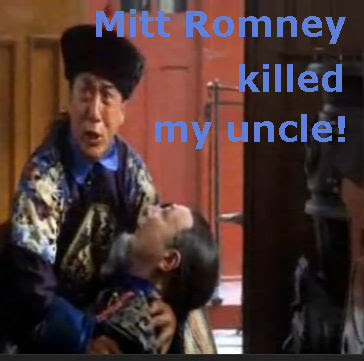


Let me know if you spot any more.
What's not known is the number of things we can blame Mitt Romney for:


Let me know if you spot any more.
2012년 7월 20일 금요일
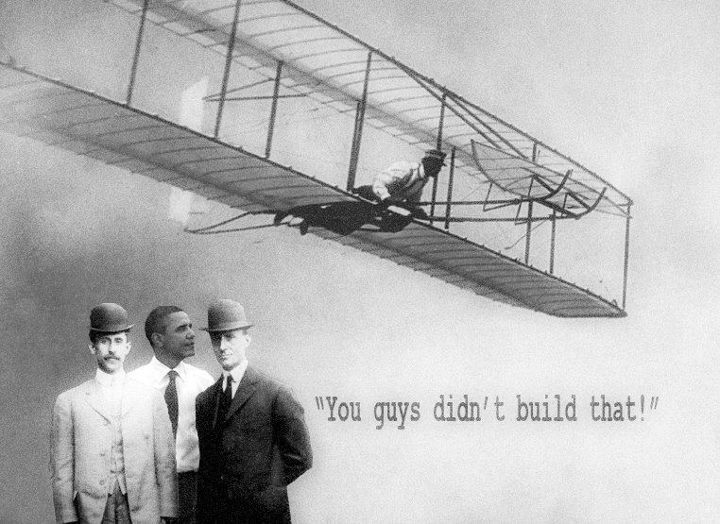


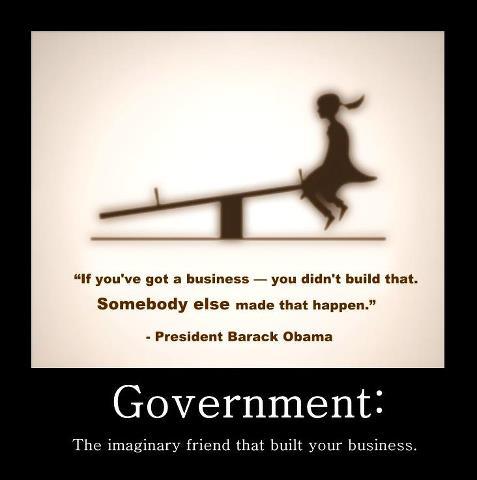
First Week in Seosan
Well, I've finished my first week, and overall I think it went pretty well. I'm starting to get the feel of handling classes of over 30 kids who have memorized English vocabulary and drilled on English sentences but don't really understand or speak English. And I think my co-teachers are starting to trust me. Early in the week they were very involved, sort of babysitting the kids, translating a lot, etc. By the end of the week many of them would do their own extra end-of-the-semester work and just monitor and be on hand if the kids were struggling very hard or if a particularly difficult concept came up. One of the co-teachers exclaimed, "I think you were born to teach!"
In fact, they stopped protesting when I told the students that in MY class, we speak ONLY ENGLISH. I clarified that they could use Korean *when they needed help finding the right words to say something in English.* I also clarified that I don't expect full sentences, that I know they'll be using pantomime and single words at first. I assured them that I would help them learn to put their own thoughts into English. The teachers and kids are very skeptical, but I think it can work, and much more quickly than the Korean teachers think.
Since their heads are chock-full of memorized English, and a lot of them can write in English fairly well, some of the classes will probably be able to speak quite a bit by the end of the year. My hope for the less skilled classes is that they'll lose their fear of trying to communicate with English speakers without using Korean. Either way, I think that the English Only Rule will be enforceable after two months or so, the same as for a preschool class in a hagwan. Yeah, the hagwan preschoolers spent much more time with me, but they knew less English to begin with. I'm not so much teaching the older kids English as I am teaching them to use something that they're already familiar with. It's almost as if a class of home-ec students had spent years reading recipes, measuring ingredients, sautéing onions, slicing carrots, and so forth, but had never actually cooked anything. They know the theory. Now it's time to put it into practice.
The trick will be coming up with lessons that reinforce the targets from the books. The problem is, after going through the books, I'm a bit bewildered as to what the goal is for each lesson. It's more like they have canned vocabulary and sentences for certain situations than that they want the kids to master a specific skill, such as being able to discuss simple future plans (I'm going to watch TV.), to describe simple past events (I ate kimchi, chicken, and rice for dinner.), describe a person (She had long brown hair and brown eyes, and she's wearing a yellow shirt and blue jeans.) etc. It's hard to plan activities when you have no idea what it is they're supposed to be learning, other than the list of canned sentences that don't have much of a connection that I can see.
For summer class (about 2 weeks; then I get 8 working days of vacation!) Miss Song (a beautiful name for a beautiful woman!) wants the kids to publish a school newsletter.
I suspect that most of the kids don't actually write in English, but they write in Korean and then translate. I'll have to find out. Miss Song wants me to come up with some ways to do exercises to increase their writing skills before they start writing their articles, op-eds, etc. for the newsletter.
I'm trying to decide between two approaches: sequential (which is how Miss Song is planning right now to teach the class) and parallel. The advantage of sequential is that the kids will refine their skills before their first drafts, so that they don't become too attached to a poorly-written piece. The advantage of parallel is that it would give the kids the chance to refine their own work with minimal input from the teacher. Personally, I favor the second approach, because part of good writing is the re-write, and I want them to master that skill.
Miss Song will assign topics and the length of articles based on each student's existing skills. She's already very familiar with them. (I teach around 750 students, so there is simply no way for me to get to know all of them. ) By the end of class, of course, I'll know the 10 summer class kids pretty well, but then they'll be blending back in with the crowd.
On Monday I'll have Miss Song's preliminary lesson plans for the project, which I am to flesh out.
2012년 2월 27일 월요일
Money Can't Buy Taste, or Dressed for the Oscars
 A novel idea: Attending the Oscars disguised as a tube of mascara.
 I thought they only made bridesmaids' dresses in that color.
 It's really very clever the way they bunched up the fabric at the hip to hide her parasitic twin.
 The 1970s are calling. They want their dress back.
 Nick Nolte failed his saving-throw versus brain drain but at least his hair is combed.
 When in doubt just bunch a fitted sheet up into a skirt on one of Billie Jean King's old tennis outfits.
 It's a shame somebody leached all the chlorophyll out of that kelp or it would have made a nutritious after-party salad.
 This Bettie Page waxwork looks almost lifelike. Though I"m unclear on why she evidently has only one leg and why her bosom is framed by pieces of the Sidney Opera House.
 Penelope was one of the many Hollywood beauties who wore stiletto heels to the dress fitting but opted to wear flats on the red carpet. Either that or there's a new style in dresses that don't actually open at the bottom.
 This lovely little number was pieced together from the table skirts and lampshades at a bordello.
 Meryl Streep was in a hurry and didn't have the time to have the fabric actually sewn into a dress. Toga! Toga! Toga!
 You'd think Mr. Darcy's wife wouldn't be reduced to stealing a dress from an old trunk that used to belong to the Lennon Sisters.
 Her dress is climbing up her neck and attempting to strangle her.
 Gary Oldman looks goofy, sorry, and his date stole her dress from Morticia Addams.
 Morticia's closet is still not safe.
Sandra Bullock has been reduced to raiding the estate of Margaret Dumont.
 There was nothing left in Morticia's closet so she had to steal the draperies.
 The dresses and the drapes were taken, but Morticia's shower curtain makes a passable dress.
 The Addams home has been gutted.
2011년 5월 4일 수요일
I Was a Teenage Poverty Pimp
Okay, I stuck the word "teenage" in there for poetic effect. But the basic idea, I was a poverty pimp, holds.
I took taxpayer's money and squandered it in ways that would appall them if they only knew. And I feel compelled to make amends.
You could say that I meant well -- which I did. But the road to Hell is paved with good intentions. I meant to help people get off welfare, which is a goal that the taxpayers can firmly support. But what I did in practice was prop up a bloated bureaucracy that sees welfare recipients as a faceless mass existing purely to keep federal block grant money flowing so that we -- the tax-funded workers -- could keep our jobs.
I tried to make the program functional, within and in spite of the constraints put upon us by Congress and the Bureau of Employment and Training Programs. It was a mostly futile gesture. Call it "rearranging deck chairs on the Titanic." Call it "making a silk purse out of a sow's ear." Call it "a day late and a dollar short." It all amounts to the same thing. There is no way that any permutation of the 1996 Personal Responsibility and Work Opportunity Reconciliation Act (aka "Welfare Reform"), especially not as interpreted to the Pennsylvania Bureau of Employment & Training Programs (aka "BETP"), is going to accomplish its stated goals except as a fortuitous side effect.
Most of the people who get off welfare and get jobs would have done so anyway, with or without our program. If our program had any real effect on these people, it was mostly by annoying them so much that even the suckiest dead-end minimum-wage job was an improvement. But if you're going to get people off welfare by annoying them, it would be a lot cheaper and more cost-effective to heard them all into a room and make them listen to tapes of Gilbert Gottfried reading Finnegan's Wake.
What about the people who remain on welfare? Are they, as the Left asserts, plagued by barriers such as lack of training, lack of child care, lack of appropriate health services, and so on? Are they, as the Right asserts, just feckless moochers?
There are some welfare recipients who fit pretty well into one or the other of those stereotypes. "Janice", for example, had housing problems, transportation problems, and less than idea job skills. But her biggest real barrier to long-term employment is that she had mental health problems that weren't severe enough to warrant going on disability, but kept her from developing the coping skills to overcome them and hold down a job. Peer support or even simple coaching would enable her to get and maintain a job.
"Marty", on the other hand, had an illness that limited his ability to do strenuous labor, and didn't have a GED, but he had access to job training and funding for equipment that would have enabled him to earn a living. Marty wasn't interested; his life goal was to leverage his illness into a disability claim so that he could vegetate in front of the TV drinking beer the rest of his life. "Marty" was a slug and a bum -- but he was far more of an aberration that the Right would like to believe.
My observation is that there were far more people like Janice than like Marty. But Welfare Reform isn't set up to serve one or bitch-slap the other. It's set up to fill the welfare recipient's day with federally-approved activities for a federally-mandated amount of time every week, ultimately regardless of what would actually boost the person off welfare and into independence.
So I spent my time channeling folks like Janice into "work skills" activities that really didn't help her, because the skills she needed were illness management. I'd spend time channeling people like "Jose" into "work skills" activities when he needed a combination of English classes and job search. I'd spend time channeling "Jerica" into "work skills" activities when what she needed was to learn to budget for car repairs.
There are things we could be doing to equip people to enter and stay in the job market, and things we could be doing to boot shiftless slugs off the public dole. Most of the former could -- and should -- be done in the school system, not by engaging in "self-esteem" activities, but by teaching them to identify and develop their skills, to set and accomplish goals, and to recognize their own ability to set and follow through on a positive life trajectory. As long as they're trapped in a union-driven public school system that holds kids hostage, none of this is likely to happen. And most of the latter could be booted off the dole -- they'd pretty quickly rearrange their goals to include working for a living.
While I was working inside the system, I could tweak it. I could do my best of encourage my clients, to steer them toward what they really needed, and to creatively interpret the rules to allow them to engage in truly productive, dignity-based activities. I could throw the shiftless out of the program and at least hope that they'd be sanctioned and lose their free money. But I could do nothing to change the wasteful, spirit-crushing, dehumanizing nature of the system as it stands.
I'm praying that I can find work somewhere in the field of public policy, where I can turn my experience into a force for reform. If I do, then the time I spent as an employment and training Case Manger can be redeemed. If I can't, it will always remain a shameful blot on my record: my time as a poverty pimp.
I took taxpayer's money and squandered it in ways that would appall them if they only knew. And I feel compelled to make amends.
You could say that I meant well -- which I did. But the road to Hell is paved with good intentions. I meant to help people get off welfare, which is a goal that the taxpayers can firmly support. But what I did in practice was prop up a bloated bureaucracy that sees welfare recipients as a faceless mass existing purely to keep federal block grant money flowing so that we -- the tax-funded workers -- could keep our jobs.
I tried to make the program functional, within and in spite of the constraints put upon us by Congress and the Bureau of Employment and Training Programs. It was a mostly futile gesture. Call it "rearranging deck chairs on the Titanic." Call it "making a silk purse out of a sow's ear." Call it "a day late and a dollar short." It all amounts to the same thing. There is no way that any permutation of the 1996 Personal Responsibility and Work Opportunity Reconciliation Act (aka "Welfare Reform"), especially not as interpreted to the Pennsylvania Bureau of Employment & Training Programs (aka "BETP"), is going to accomplish its stated goals except as a fortuitous side effect.
Most of the people who get off welfare and get jobs would have done so anyway, with or without our program. If our program had any real effect on these people, it was mostly by annoying them so much that even the suckiest dead-end minimum-wage job was an improvement. But if you're going to get people off welfare by annoying them, it would be a lot cheaper and more cost-effective to heard them all into a room and make them listen to tapes of Gilbert Gottfried reading Finnegan's Wake.
What about the people who remain on welfare? Are they, as the Left asserts, plagued by barriers such as lack of training, lack of child care, lack of appropriate health services, and so on? Are they, as the Right asserts, just feckless moochers?
There are some welfare recipients who fit pretty well into one or the other of those stereotypes. "Janice", for example, had housing problems, transportation problems, and less than idea job skills. But her biggest real barrier to long-term employment is that she had mental health problems that weren't severe enough to warrant going on disability, but kept her from developing the coping skills to overcome them and hold down a job. Peer support or even simple coaching would enable her to get and maintain a job.
"Marty", on the other hand, had an illness that limited his ability to do strenuous labor, and didn't have a GED, but he had access to job training and funding for equipment that would have enabled him to earn a living. Marty wasn't interested; his life goal was to leverage his illness into a disability claim so that he could vegetate in front of the TV drinking beer the rest of his life. "Marty" was a slug and a bum -- but he was far more of an aberration that the Right would like to believe.
My observation is that there were far more people like Janice than like Marty. But Welfare Reform isn't set up to serve one or bitch-slap the other. It's set up to fill the welfare recipient's day with federally-approved activities for a federally-mandated amount of time every week, ultimately regardless of what would actually boost the person off welfare and into independence.
So I spent my time channeling folks like Janice into "work skills" activities that really didn't help her, because the skills she needed were illness management. I'd spend time channeling people like "Jose" into "work skills" activities when he needed a combination of English classes and job search. I'd spend time channeling "Jerica" into "work skills" activities when what she needed was to learn to budget for car repairs.
There are things we could be doing to equip people to enter and stay in the job market, and things we could be doing to boot shiftless slugs off the public dole. Most of the former could -- and should -- be done in the school system, not by engaging in "self-esteem" activities, but by teaching them to identify and develop their skills, to set and accomplish goals, and to recognize their own ability to set and follow through on a positive life trajectory. As long as they're trapped in a union-driven public school system that holds kids hostage, none of this is likely to happen. And most of the latter could be booted off the dole -- they'd pretty quickly rearrange their goals to include working for a living.
While I was working inside the system, I could tweak it. I could do my best of encourage my clients, to steer them toward what they really needed, and to creatively interpret the rules to allow them to engage in truly productive, dignity-based activities. I could throw the shiftless out of the program and at least hope that they'd be sanctioned and lose their free money. But I could do nothing to change the wasteful, spirit-crushing, dehumanizing nature of the system as it stands.
I'm praying that I can find work somewhere in the field of public policy, where I can turn my experience into a force for reform. If I do, then the time I spent as an employment and training Case Manger can be redeemed. If I can't, it will always remain a shameful blot on my record: my time as a poverty pimp.
피드 구독하기:
글 (Atom)
