2012년 8월 8일 수요일
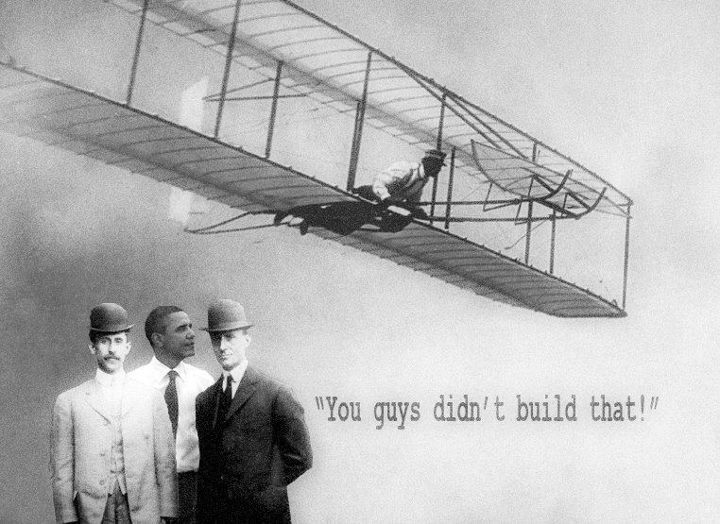
Blame Mitt Romney!
What's not known is the number of things we can blame Mitt Romney for:
Let me know if you spot any more.
2012년 7월 20일 금요일
First Week in Seosan
Well, I've finished my first week, and overall I think it went pretty well. I'm starting to get the feel of handling classes of over 30 kids who have memorized English vocabulary and drilled on English sentences but don't really understand or speak English. And I think my co-teachers are starting to trust me. Early in the week they were very involved, sort of babysitting the kids, translating a lot, etc. By the end of the week many of them would do their own extra end-of-the-semester work and just monitor and be on hand if the kids were struggling very hard or if a particularly difficult concept came up. One of the co-teachers exclaimed, "I think you were born to teach!"
In fact, they stopped protesting when I told the students that in MY class, we speak ONLY ENGLISH. I clarified that they could use Korean *when they needed help finding the right words to say something in English.* I also clarified that I don't expect full sentences, that I know they'll be using pantomime and single words at first. I assured them that I would help them learn to put their own thoughts into English. The teachers and kids are very skeptical, but I think it can work, and much more quickly than the Korean teachers think.
Since their heads are chock-full of memorized English, and a lot of them can write in English fairly well, some of the classes will probably be able to speak quite a bit by the end of the year. My hope for the less skilled classes is that they'll lose their fear of trying to communicate with English speakers without using Korean. Either way, I think that the English Only Rule will be enforceable after two months or so, the same as for a preschool class in a hagwan. Yeah, the hagwan preschoolers spent much more time with me, but they knew less English to begin with. I'm not so much teaching the older kids English as I am teaching them to use something that they're already familiar with. It's almost as if a class of home-ec students had spent years reading recipes, measuring ingredients, sautéing onions, slicing carrots, and so forth, but had never actually cooked anything. They know the theory. Now it's time to put it into practice.
The trick will be coming up with lessons that reinforce the targets from the books. The problem is, after going through the books, I'm a bit bewildered as to what the goal is for each lesson. It's more like they have canned vocabulary and sentences for certain situations than that they want the kids to master a specific skill, such as being able to discuss simple future plans (I'm going to watch TV.), to describe simple past events (I ate kimchi, chicken, and rice for dinner.), describe a person (She had long brown hair and brown eyes, and she's wearing a yellow shirt and blue jeans.) etc. It's hard to plan activities when you have no idea what it is they're supposed to be learning, other than the list of canned sentences that don't have much of a connection that I can see.
For summer class (about 2 weeks; then I get 8 working days of vacation!) Miss Song (a beautiful name for a beautiful woman!) wants the kids to publish a school newsletter.
I suspect that most of the kids don't actually write in English, but they write in Korean and then translate. I'll have to find out. Miss Song wants me to come up with some ways to do exercises to increase their writing skills before they start writing their articles, op-eds, etc. for the newsletter.
I'm trying to decide between two approaches: sequential (which is how Miss Song is planning right now to teach the class) and parallel. The advantage of sequential is that the kids will refine their skills before their first drafts, so that they don't become too attached to a poorly-written piece. The advantage of parallel is that it would give the kids the chance to refine their own work with minimal input from the teacher. Personally, I favor the second approach, because part of good writing is the re-write, and I want them to master that skill.
Miss Song will assign topics and the length of articles based on each student's existing skills. She's already very familiar with them. (I teach around 750 students, so there is simply no way for me to get to know all of them. ) By the end of class, of course, I'll know the 10 summer class kids pretty well, but then they'll be blending back in with the crowd.
On Monday I'll have Miss Song's preliminary lesson plans for the project, which I am to flesh out.
2012년 2월 27일 월요일
Money Can't Buy Taste, or Dressed for the Oscars
Sandra Bullock has been reduced to raiding the estate of Margaret Dumont.
2011년 5월 4일 수요일
I Was a Teenage Poverty Pimp
I took taxpayer's money and squandered it in ways that would appall them if they only knew. And I feel compelled to make amends.
You could say that I meant well -- which I did. But the road to Hell is paved with good intentions. I meant to help people get off welfare, which is a goal that the taxpayers can firmly support. But what I did in practice was prop up a bloated bureaucracy that sees welfare recipients as a faceless mass existing purely to keep federal block grant money flowing so that we -- the tax-funded workers -- could keep our jobs.
I tried to make the program functional, within and in spite of the constraints put upon us by Congress and the Bureau of Employment and Training Programs. It was a mostly futile gesture. Call it "rearranging deck chairs on the Titanic." Call it "making a silk purse out of a sow's ear." Call it "a day late and a dollar short." It all amounts to the same thing. There is no way that any permutation of the 1996 Personal Responsibility and Work Opportunity Reconciliation Act (aka "Welfare Reform"), especially not as interpreted to the Pennsylvania Bureau of Employment & Training Programs (aka "BETP"), is going to accomplish its stated goals except as a fortuitous side effect.
Most of the people who get off welfare and get jobs would have done so anyway, with or without our program. If our program had any real effect on these people, it was mostly by annoying them so much that even the suckiest dead-end minimum-wage job was an improvement. But if you're going to get people off welfare by annoying them, it would be a lot cheaper and more cost-effective to heard them all into a room and make them listen to tapes of Gilbert Gottfried reading Finnegan's Wake.
What about the people who remain on welfare? Are they, as the Left asserts, plagued by barriers such as lack of training, lack of child care, lack of appropriate health services, and so on? Are they, as the Right asserts, just feckless moochers?
There are some welfare recipients who fit pretty well into one or the other of those stereotypes. "Janice", for example, had housing problems, transportation problems, and less than idea job skills. But her biggest real barrier to long-term employment is that she had mental health problems that weren't severe enough to warrant going on disability, but kept her from developing the coping skills to overcome them and hold down a job. Peer support or even simple coaching would enable her to get and maintain a job.
"Marty", on the other hand, had an illness that limited his ability to do strenuous labor, and didn't have a GED, but he had access to job training and funding for equipment that would have enabled him to earn a living. Marty wasn't interested; his life goal was to leverage his illness into a disability claim so that he could vegetate in front of the TV drinking beer the rest of his life. "Marty" was a slug and a bum -- but he was far more of an aberration that the Right would like to believe.
My observation is that there were far more people like Janice than like Marty. But Welfare Reform isn't set up to serve one or bitch-slap the other. It's set up to fill the welfare recipient's day with federally-approved activities for a federally-mandated amount of time every week, ultimately regardless of what would actually boost the person off welfare and into independence.
So I spent my time channeling folks like Janice into "work skills" activities that really didn't help her, because the skills she needed were illness management. I'd spend time channeling people like "Jose" into "work skills" activities when he needed a combination of English classes and job search. I'd spend time channeling "Jerica" into "work skills" activities when what she needed was to learn to budget for car repairs.
There are things we could be doing to equip people to enter and stay in the job market, and things we could be doing to boot shiftless slugs off the public dole. Most of the former could -- and should -- be done in the school system, not by engaging in "self-esteem" activities, but by teaching them to identify and develop their skills, to set and accomplish goals, and to recognize their own ability to set and follow through on a positive life trajectory. As long as they're trapped in a union-driven public school system that holds kids hostage, none of this is likely to happen. And most of the latter could be booted off the dole -- they'd pretty quickly rearrange their goals to include working for a living.
While I was working inside the system, I could tweak it. I could do my best of encourage my clients, to steer them toward what they really needed, and to creatively interpret the rules to allow them to engage in truly productive, dignity-based activities. I could throw the shiftless out of the program and at least hope that they'd be sanctioned and lose their free money. But I could do nothing to change the wasteful, spirit-crushing, dehumanizing nature of the system as it stands.
I'm praying that I can find work somewhere in the field of public policy, where I can turn my experience into a force for reform. If I do, then the time I spent as an employment and training Case Manger can be redeemed. If I can't, it will always remain a shameful blot on my record: my time as a poverty pimp.
2011년 4월 15일 금요일
Ecclesiastes Chapter 1
2 “Meaningless! Meaningless!”
says the Teacher.
“Utterly meaningless!
Everything is meaningless.”
Solomon (I'll just assume it was Solomon.) beat the Goths and nihilists to the punch by several millennia. So anybody who throws up his hands and yells, "What's the freaking POINT!?!" is following on well worn footsteps. (I've done so myself.)
3 What do people gain from all their labors
at which they toil under the sun?
4 Generations come and generations go,
but the earth remains forever.
And every generation thinks they're special.
Hey, Phil Collins, screeching, "I won't be coming home tonight / My generation will put it right / We won't be making promises / That we know we'll never keep." Notice that you're an old fart now and you and your generation were no more successful than any generation before you. The world is still a mess. Did you really think that everybody that came before you was a hypocrite and meaningless posturer, and that you and your generation were the first with noble intentions and boundless energy and a determination that you would be able to somehow fix what nobody was able to fix before you?
We all work hard, and it never lasts.
7 All streams flow into the sea,
yet the sea is never full.
To the place the streams come from,
there they return again.
Solomon noticed this long before scientists discovered The Water Cycle.
8 All things are wearisome,
more than one can say.
Anybody who has tried to stay on top of the laundry and the dishes and to keep the yard mowed and the car running knows this.
10 Is there anything of which one can say,
“Look! This is something new”?
It was here already, long ago;
it was here before our time.
Titanic was new. Hubris wasn't. Titanic is now at the bottom of the Atlantic. And the idea that we can build better and more significant things is an old one. We think we can cheat death with modern medicine and congratulate ourselves. Guess what? The pharaohs thought they could cheat death too. They pyramids are pretty groovy, but the pharaohs are still dead.
11 No one remembers the former generations,
and even those yet to come
will not be remembered
by those who follow them.
Lest you start to think, "Ha, Solomon! We've got you on that! Everybody remembers you!" ask yourself, "What were Solomon's favorite foods? Was he a night person or a morning person? Did he whistle to himself?" We don't know Solomon as a person. We just know what God chose from his work to allow to endure. Solomon himself, the living, breathing man, is just as forgotten as any of his concubines. Were he to show up in the middle of a revival meeting, nobody would recognize him -- unless the Holy Spirit granted knowledge.
what is lacking cannot be counted.
Look at all the results of Communism if you doubt this.
16 I said to myself, “Look, I have increased in wisdom more than anyone who has ruled over Jerusalem before me; I have experienced much of wisdom and knowledge.” 17 Then I applied myself to the understanding of wisdom, and also of madness and folly, but I learned that this, too, is a chasing after the wind.
18 For with much wisdom comes much sorrow;
the more knowledge, the more grief.
Amen to that! There's a reason we say happy people wear rose colored glasses. You have to lack the wisdom to see the world as it is to be happy in it -- except for God's grace.
Intro to Ecclesiastes, Part II
1. Accept the human state as it is shaped by God's appointments and enjoy the life you have been given as fully as you can.
This is hard for me. I always want to change things that are screwy or counterproductive. (BETP Master Guidelines, for example.) But I can't change the nature of bureaucrats any more than I can change the nature of bees. Bees make honey, bureaucrats make rules. I can adapt, I can move on, but above all I need to remember that when Jesus showed up in the flesh, he didn't spend time trying to change the laws and rules and regulations. He worked on hearts and souls and frail human flesh. So it's important to keep that perspective -- that the rules will come and go, but the souls of the bureaucrats, like the souls of the people toiling under the rules, will last forever.
2. Don't trouble yourself with unrealistic goals -- know the measure of human capabilities.
But note that it's unrealistic goals one is to avoid. ("God grant me the serenity to accept the things I can not change....") One must seek God's wisdom, not man's wisdom, to identify appropriate goals. William Wilberforce, after all, took on the goal of abolishing slavery -- quite a mouthful to bite off! Vivien Thomas took on the goal of making heart surgery a reality. So clearly this isn't a caution not to set big goals. But all things considered, it's the eternal perspective one needs to keep, and allowing God to appoint times and places and people.
3. Be prudent in all your ways -- follow wisdom's leading.
Imprudence just gets you and others hurt.
4. "Fear God and keep His commandments."
And trust Him to order things as they need to be. Esther's parents didn't do anything at all that was worth recording in the Bible -- but had they not married and had a child, what would have happened to the Jews? But it was Esther who came into the world "for such a time as this."
To sum up, Ecclesiastes provides instruction on how to live meaningfully, purposefully and joyfully in the theocratic arrangement -- primarily by placing God at the center of one's life, work, and activities. In contentedly accepting one's divinely appointed lot in life, and by reverently trusting in and obeying the Creator-King.